

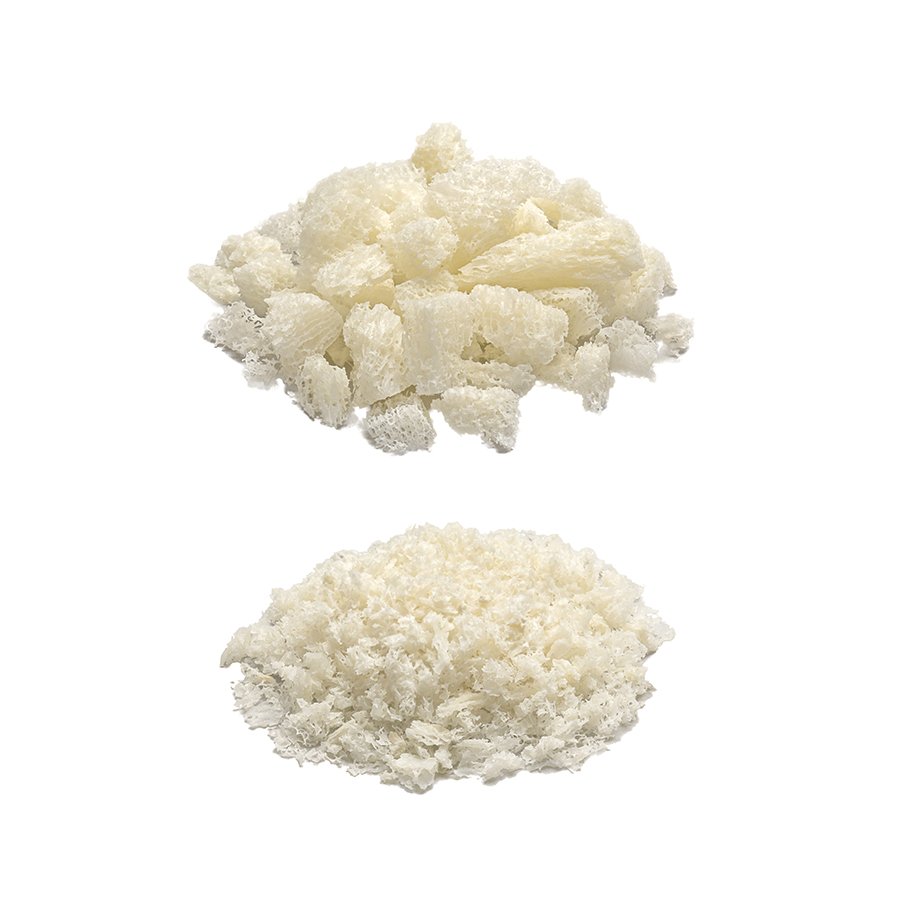
Scientific Point of View
Bone graft success depends on osteoconduction, osteoinduction, and mechanical stability. The ratio of cortical to cancellous bone influences these factors.
1. Cortical Bone Component
- 80% cortical (vs. 70%) means denser, stronger graft material.
- Cortical bone resorbs more slowly → maintains volume and mechanical strength longer.
- Provides structural stability in load-bearing areas (e.g., posterior mandible, sinus floor with thin residual ridge).
- Lower surface area compared to cancellous → fewer initial osteogenic cells, but prolonged scaffold stability.
2. Cancellous Bone Component
- 20% cancellous (vs. 30%) means slightly less porosity and vascular access.
- Cancellous bone resorbs faster, has higher surface area, and promotes rapid vascularization and cell infiltration.
- Reducing from 30% → 20% means slower early turnover but more sustained long-term graft mass.
3. Biological Balance
- 80:20 ratio favors volume maintenance and strength at the expense of slightly slower initial integration.
- 70:30 ratio favors faster revascularization and remodeling, but with more risk of graft resorption and volume loss over time.
Clinical Applications
- 80:20 Cortical:Cancellous (More Cortical)
- Best for cases where space maintenance and long-term volume stability are critical:
- Ridge augmentation in severely atrophic jaws.
- Onlay block grafts.
- Sinus lifts with thin residual bone (prevent collapse).
- Vertical ridge augmentation where load and collapse resistance matter.
- Advantage: Slower resorption → maintains ridge width/height better for implant placement.
70:30 Cortical:Cancellous (More Cancellous)
- Best for cases where rapid vascularization and faster turnover are needed:
- Small contained defects (extraction sockets, intraosseous defects).
- Situations where implants will be placed earlier (short healing periods).
- Sites with good surrounding bone walls that already provide structural support.
- Advantage: Faster integration → suitable when time to implant placement is short.
Summary:
- 80:20 grafts = slower resorption, stronger scaffold, longer-lasting volume → ideal for large, critical defects and load-bearing reconstructions.
- 70:30 grafts = faster vascularization, quicker turnover → ideal for smaller contained defects where time to implant placement is shorter.
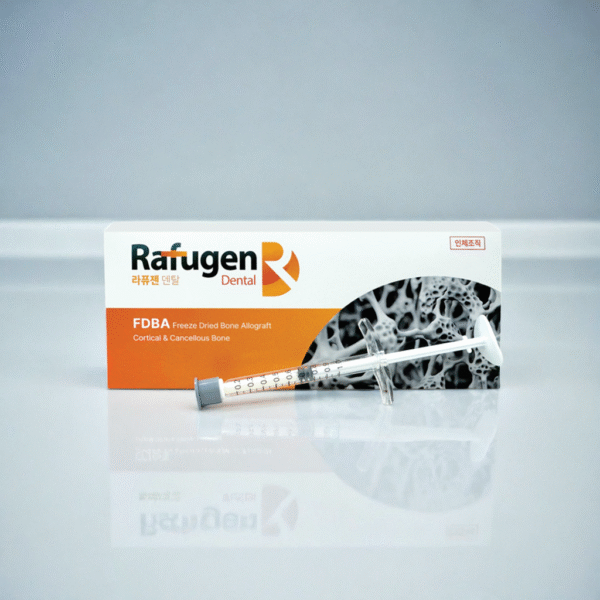
Rafugen Dental Allograft FDBA
Designed for precise grafting, ensuring controlled and efficient application, effectively supports bone regrowth, composed of cortical and cancellous bone in an 80/20 ratio.

Leave a Comment
Your email address will not be published. Required fields are marked *